Beyond the GoPro: The Marine Industry's Live Underwater Camera Revolution
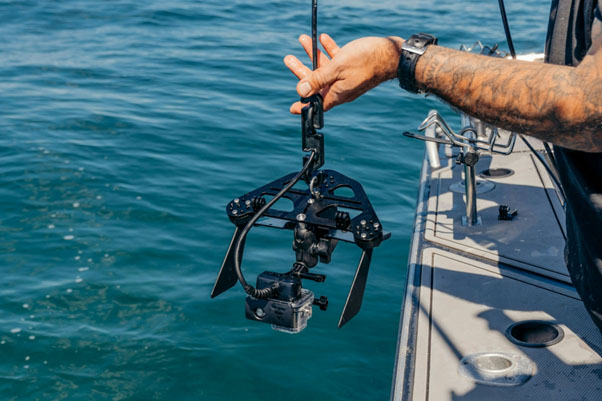
(Lowering a GoPro into the water with a live underwater camera system set up. Credit: Seavu)
The marine industry has experienced a rapid shift in imaging technology. In the past, it relied heavily on specialist custom-built, five-figure camera rigs to capture high-quality footage. This excluded independent researchers and smaller operators priced out of specialist equipment.
Today, there are more options than ever before, with GoPro and DJI action cameras - originally built for extreme sports - are now being adapted with purpose-built marine tethering systems to deliver real-time HD data from below the surface. It’s changing how the industry approaches marine research, infrastructure inspection, and commercial fishing.
Tethering Technology Unlocks New Capabilities
The marine industry has faced several hurdles over the years, and one of the most significant was that standard communication protocols, including WiFi and Bluetooth, for modern action cameras were blocked by water. This confined action cameras to surface use only, limiting their value in situations where real-time subsurface data was critical.
Technology has finally changed that with purpose-built tether systems, transforming a compatible action camera into a live underwater camera, which provides a real-time stream directly to a tablet, chartplotter, or phone. With marine-grade cable connections designed to bypass the signal-blocking hurdle, operators can maintain a stable feed to depths of 50 metres.
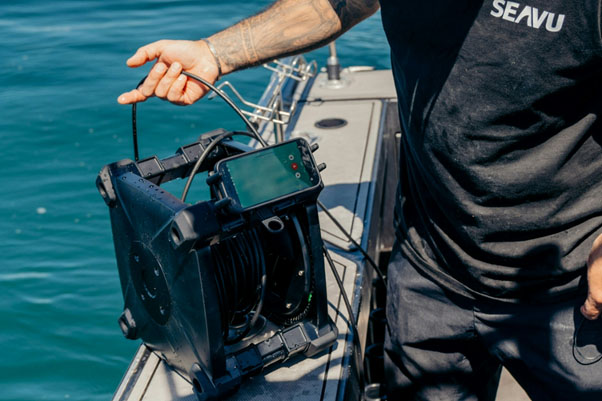
(Image: Live video feed using underwater camera system. Credit: Seavu)
Research & Commercial Opportunities
These purpose-built tether systems are a game-changer for several sectors in the marine industry, including research, subsea inspections, and fisheries of all sizes.
● Research
Live underwater camera systems provide scientists and researchers with live access to marine life behaviour as it unfolds, also capturing environmental changes. In Australia, institutions including James Cook University’s TropWATER and the Australian Institute of Marine Science (AIMS) have adopted live underwater camera systems to conduct non-invasive benthic habitat surveys, reducing the need for dive teams and accelerating data collection in remote locations.
● Subsea Inspection
Whether you operate a charter or you’re in the boat-building business, there are significant operational costs and risks associated with inspections. Deploying a diver to inspect moorings, running gear, and hulls is no longer necessary with a HD livestream to detect structural anomalies or signs of corrosion early. With a regular sweep covering these inspection points, operators can address issues while they’re minor, saving significant money in the long run.
● Fisheries
Commercial fishery operators are now integrating livestreams with electronic monitoring systems to provide real-time footage. In addition to immediate species identification, this real-time footage improves data accuracy for stock management purposes and helps reduce bycatch numbers. The approach also offers a cost-effective alternative to on-board human observers, which are required under some Australian fisheries compliance frameworks.
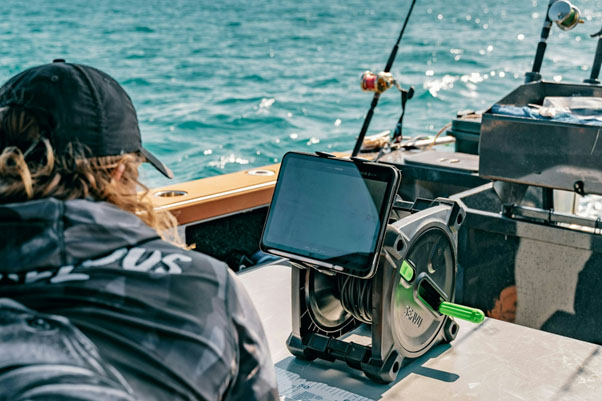
(Image: Live underwater video monitoring. Credit: Seavu)
Onboard Integration
As the marine industry moves closer to being more connected across the board, many manufacturers are ensuring there are sufficient external video inputs on multi-function displays. Modern live underwater camera systems output via HDMI, allowing operators to stream real-time subsurface footage directly to chartplotters, onboard monitors, or mobile devices, integrating seamlessly with existing navigation infrastructure.
These systems are also being used to detect anomalies in pipelines and count fish populations, effectively transforming an underwater camera from merely a recording device into a smart sensor once integrated with existing onboard technology.
Marine Efficiency
The first is cost-based, with an action camera and tethering system costing a fraction of what traditional imaging systems cost. This allows smaller operators and independent researchers the same access to up-to-date subsea data as large-scale outfits enjoy. With a lower cost of entry, real-time underwater capability is no longer the exclusive domain of well-funded research programmes or large commercial operators.
The second is performance efficiency. It evens the playing field as the reliance on real-time marine data increases. Australian-developed systems such as Seavu’s live underwater camera systems allow operators of all sizes to access professional-grade subsurface data in real time.
The convergence of consumer action camera technology and purpose-built marine tethering systems has opened a new chapter in subsurface observation - one that is already reshaping how Australia’s marine sector conducts research, manages fisheries and maintains fleets. As adoption grows across both commercial and recreational applications, the question for operators is no longer whether real-time underwater visibility is achievable, but how quickly they can put it to work.
|