
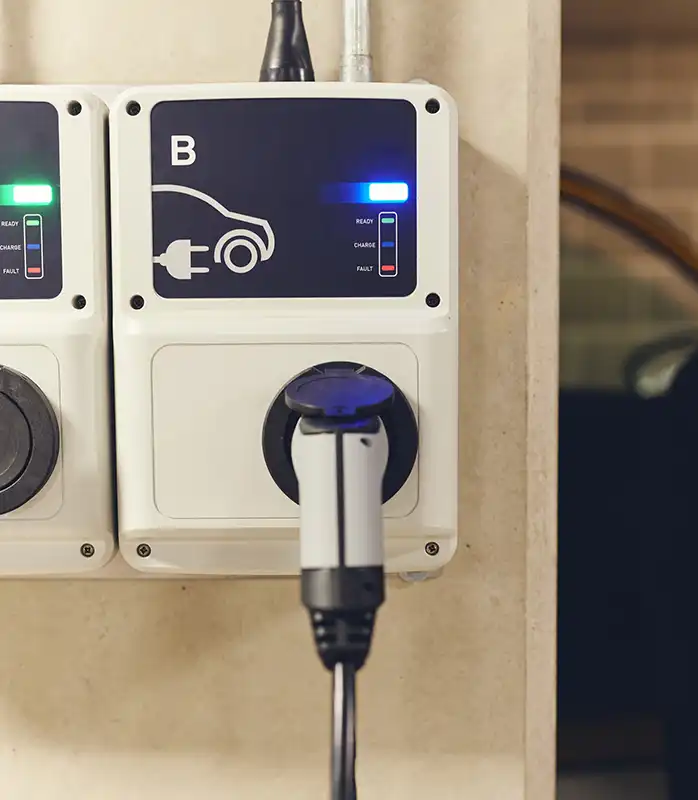
Electric vehicles are becoming a common sight on Australian roads, and for most owners the bulk of charging happens at home. While you can charge an EV from a standard power point, it is slow. A dedicated home charger is faster, safer and more convenient, but installing one involves more than simply mounting a box on the garage wall.
If you are thinking about getting an EV, or you have just bought one, here is what you need to know about home charger installation.
There are two main ways to charge at home:
For most households, a 7 kW single-phase charger is the sweet spot between cost and convenience, allowing a full overnight charge for most daily driving needs.
A wall charger can draw a large share of your home’s total power capacity for hours at a time. Before installation, a licensed electrician should assess:
Some chargers include load management, which automatically reduces charging speed when the rest of the house is drawing heavy power. This can avoid the need for an expensive supply upgrade.
If you have rooftop solar, a smart charger can be set to prioritise excess solar generation, so your car fills up with energy you would otherwise export for a small feed-in credit. Many chargers also let you schedule charging for off-peak times if your electricity plan offers cheaper overnight rates. An app on your phone usually controls these settings.
A typical installation includes:
Most straightforward installations can be completed in a few hours. More complex jobs, such as long cable runs, outdoor locations or switchboard upgrades, take longer.
Costs vary widely depending on the charger you choose and the complexity of the job. The charger itself can range from several hundred dollars to a couple of thousand. Installation costs depend on cable length, switchboard condition and whether any upgrades are required. Getting an on-site quote is the only way to know the true cost for your home.
All EV charger installations must be carried out by a licensed electrician and comply with Australian wiring standards. In some cases, particularly for higher-capacity three-phase chargers or where supply upgrades are needed, your electrician may need to notify or seek approval from the local network operator. If you live in a strata complex, you will usually need approval from the body corporate before installing a charger in a shared car park.
When choosing a charger, consider your vehicle’s maximum charging rate, whether you want solar integration, cable length and whether you prefer a tethered cable or a socket. For the installation itself, use a licensed electrician who has experience with EV charger installation and can assess your switchboard properly before work begins.
A properly installed home charger makes owning an EV easy. You wake up to a full battery every morning without visiting a public charging station. Taking the time to check your power supply, choose the right charger and use a qualified installer ensures your charging setup is safe, efficient and ready for years of use.
This
website developed and maintained by Travel Australia Network & Blogticles Australia for Australian and International providers ©
last updated
27-Nov-2026
|