Color Game Live Perya: From Fiesta Fun to Online Excitement
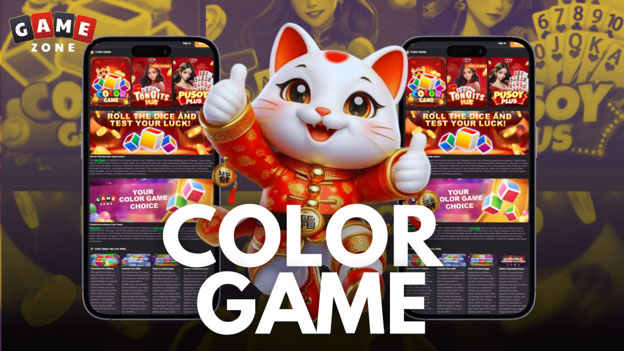
The Philippines has never been short on colorful traditions. From lively town fiestas to bustling community celebrations, Filipinos have always found ways to gather, celebrate, and enjoy simple forms of entertainment.
Among the most recognizable attractions at any traditional perya is the Color Game, a game that has entertained generations with nothing more than bright colors, a bit of luck, and plenty of excitement.
Today, that same experience has found a new home online.
Color Game live perya takes a familiar fiesta favorite and brings it into the digital age. What once required a trip to a local carnival can now be enjoyed from a smartphone, tablet, or computer.
It is a fascinating example of how traditional Filipino entertainment continues to evolve without losing the charm that made it popular in the first place.
As technology becomes an increasingly important part of everyday life, classic games are finding new audiences online. Color Game live perya stands out because it successfully combines nostalgia, simplicity, and modern convenience into a single experience.
Key Takeaways
- Color Game live perya is the online version of the traditional Color Game found in Philippine fiestas and carnivals.
- The game originated in local perya events that have been part of Filipino culture for generations.
- Online platforms make the game accessible anytime and anywhere.
- The core mechanics remain largely unchanged despite the digital transition.
- Psychological factors often influence how players choose colors and make decisions.
- Platforms such as GameZone help introduce traditional Filipino-inspired games to modern audiences.
Why Filipinos Still Love the Color Game
Not every game survives the test of time. Some trends disappear as quickly as they arrive, while others remain popular for decades. The Color Game belongs firmly in the second category.
Its appeal starts with its simplicity. There are no complicated rules to memorize and no lengthy tutorials to watch. Players simply select one or more colors and wait for the result. Within moments, the outcome is revealed.
That straightforward approach is a major reason why the game continues to attract participants of all ages.
Another factor is the pace. Modern entertainment often competes for attention, and people tend to gravitate toward experiences that provide quick results. Color Game rounds move quickly, creating a cycle of anticipation and excitement that keeps players engaged.
The colorful visuals also play a role. Humans naturally respond to bright colors, and the game's vibrant presentation makes it instantly appealing. Sometimes the simplest ingredients create the most memorable experiences. Human history is surprisingly full of examples proving that people can stay entertained by colored objects for a very long time.
Most importantly, many Filipinos associate the Color Game with cherished memories of family gatherings, fiestas, and childhood adventures. Playing Color Game live perya online allows people to reconnect with those memories while enjoying the convenience of modern technology.
From Carnival Booths to Digital Screens
Long before smartphones became a daily necessity, the Color Game was already a staple attraction at fiestas across the country.
The game's roots can be traced back to the traditional Philippine perya. The term "perya" comes from the Spanish word "feria," meaning fair or festival. These traveling carnivals became an important part of community celebrations, bringing rides, games, food vendors, and entertainment to towns and provinces nationwide.
Among the many attractions, the Color Game consistently drew crowds.
Traditional versions typically featured colored squares and specially designed dice. Participants placed wagers on their chosen colors before the operator rolled the dice. If a selected color appeared, players received a payout according to the established rules.
The formula was simple, but it worked.
Because the game required very little explanation, first-time players could participate almost immediately. This accessibility helped turn the Color Game into one of the most recognizable games in Filipino carnival culture.
Fast forward to today, and the experience has evolved significantly.
As internet access expanded throughout the Philippines and smartphones became more affordable, developers began adapting familiar local games into digital formats. Color Game live perya emerged as a natural result of this trend.
Instead of standing around a carnival booth, players now interact through digital platforms. The colors remain. The suspense remains. The excitement remains. The location is simply different.
The Psychology Behind Every Color Choice
One of the most interesting aspects of Color Game live perya is not the game itself but the way people think while playing it.
Human beings are remarkably good at finding patterns. Sometimes they are even a little too good at it.
Searching for Patterns Everywhere
When players see a particular color appear multiple times, they often begin looking for hidden trends. If red has not appeared recently, some may believe it is "due" to show up soon.
This tendency is known as pattern recognition.
The human brain naturally seeks order, even when outcomes are completely random. It is a useful survival trait in many situations, though occasionally it convinces people that random dice have secret plans.
The Illusion of Control
Many players also develop favorite colors, lucky routines, or personal strategies.
Perhaps someone always chooses blue after a certain sequence. Maybe another player relies on a system they've been refining for years. Humans love creating systems. Some people even organize their refrigerator shelves like military operations.
Psychologists refer to this behavior as the illusion of control. People often feel they have more influence over random events than they actually do.
These habits can certainly make the experience more enjoyable, but they do not change the randomness of the outcome.
Remembering Wins More Than Losses
Another psychological factor involves memory.
Most people vividly remember a surprising win but quickly forget a series of ordinary losses. This mental shortcut is called availability bias.
Because memorable events are easier to recall, they often seem more common than they really are. A big win can stay in someone's mind for weeks, while less exciting outcomes fade much faster.
Emotions Drive Decisions
Excitement, confidence, anticipation, and even superstition frequently influence player choices.
Behavioral researchers have long observed that emotions play a significant role whenever uncertainty is involved. Even when probabilities remain unchanged, feelings can affect how people perceive risk and opportunity.
In many ways, Color Game live perya serves as a fascinating example of how people make decisions when luck becomes part of the equation.
How Online Platforms Changed the Experience
The shift to online platforms has done more than simply digitize the game.
It has made the experience available year-round.
Traditional perya events are often tied to local celebrations and festivals. While they remain beloved community attractions, they are limited by location and schedule. Online platforms remove those barriers, allowing players to participate whenever they choose.
This expanded accessibility has introduced the game to a wider audience. Younger generations who may not regularly attend local fiestas can still experience a modern version of the traditional Color Game.
Platforms such as GameZone have contributed to this evolution by offering Filipino-inspired gaming experiences that connect traditional concepts with modern technology.
Rather than replacing cultural traditions, these platforms help preserve them in new forms.
What the Future Could Look Like
The future of Color Game live perya appears closely tied to the continued growth of digital entertainment.
As technology advances, players may see more interactive features, improved live-streaming experiences, enhanced mobile functionality, and greater opportunities for social engagement.
Developers will likely continue exploring ways to make the experience more immersive while maintaining the straightforward gameplay that defines the Color Game.
That balance will be important.
After all, the game's popularity has never depended on complicated mechanics or advanced graphics. Its strength lies in its simplicity. Players know what to expect, and that familiarity remains part of its enduring appeal.
The digital version succeeds because it respects the original experience rather than attempting to reinvent it completely.
Conclusion
Color Game live perya is proof that traditions do not need to disappear when technology advances. Sometimes they simply find a new stage.
What started as a crowd favorite at local fiestas has successfully transitioned into the online world while preserving the straightforward gameplay that generations of Filipinos have enjoyed. The game's colorful presentation, fast-paced rounds, and nostalgic connection to Philippine culture continue to attract both longtime fans and new players.
The growth of online perya platforms, along with contributions from gaming communities and platforms such as GameZone, demonstrates how traditional Filipino entertainment can remain relevant in an increasingly digital society.
Beyond the excitement of each round, Color Game live perya also offers a fascinating glimpse into human psychology. Whether it's pattern recognition, emotional decision-making, or the search for lucky colors, the game reveals just how creative people become when chance enters the picture.
Some things change with time. Others simply find new ways to stay part of everyday life. Color Game live perya has done exactly that, bringing a beloved fiesta tradition from carnival grounds to digital screens while keeping its colorful spirit intact.
|