Smart Ways to Keep Strong Hands Intact in Pusoy
Pusoy strategy often starts with an instant reaction to a standout combo. A clean straight, a high pair, or a strong five-card set can feel too valuable to touch. The challenge comes from Pusoy’s format: every decision affects three hands at once. A “perfect” five-card group can become a liability when the remaining cards leave the Middle or Front weak, or when the strength order gets violated.

Quick Guide to Prevent Breaking
a Strong Pusoy Hand
Breaking strong
cards during Pusoy arrangement ties closely to tunnel vision. A single
impressive combination can pull attention away from the other two hands. A
fuller approach starts with reviewing all 13 cards, trying more than one
layout, and verifying the required hierarchy before locking anything in. A
structure with three functional hands can outperform a setup built around one
flashy set.
Strong Combos and the Common
Arrangement Trap
Pusoy uses a fixed structure: 13 cards
split into a Front (3 cards), Middle (5 cards), and Back (5
cards). The strength rule drives everything—Back must outrank Middle,
and Middle must outrank Front. When the order fails, a foul can follow,
turning a great-looking table into a losing result.
Strong
combinations can trigger a pattern-based bias. A player spots a ready-made
five-card hand and treats it as “untouchable.” That early impression resembles
anchoring: the first attractive detail dominates later decisions. In a real
Pusoy round, that can mean holding onto a straight or full house while the
leftover eight cards get forced into two awkward hands with limited value.
A 13-Card Mindset for Better
Pusoy Arrangement
A more reliable
method treats the deal as one connected puzzle rather than three separate
builds. The process starts by listing obvious combinations, then identifying
cards that could fit multiple lines, then testing whether the favorite
five-card group improves the total arrangement or simply looks good on its own.
A useful decision
question focuses on tradeoffs:
What happens to the Middle and Front if the Back stays intact?
That framing pushes evaluation beyond the best-looking set and toward the
entire structure.
Scenario-Based Planning:
Comparing Two Layouts
A player like
Rico receives a hand and immediately notices a powerful five-card combination.
The first move places it in the Back without modification. The remaining eight
cards then produce an unbalanced Middle and a thin Front, creating risk of a
weak lineup or hierarchy problems depending on the card distribution.
A second layout
breaks a piece of the original combo, strengthens the Middle, and creates a
more stable Front. The result can look less dramatic at first glance because
the “headline hand” is slightly weaker, but the overall shape becomes more
playable. Unknown opponent cards still control the final outcome, so the
advantage comes from improving the structure that can be controlled: the three
hands being submitted.
A Five-Check Routine for Cleaner
Pusoy Hands
Fast arrangement
tools—especially in pusoy online—can encourage quick submission. A routine can
slow the decision just enough to prevent avoidable fouls and lopsided builds.
1) Back check
The Back holds the strongest five cards available under the planned structure.
A risk appears when strength gets “left on the table” because too many good
cards get used to patch the Middle.
2) Middle
check
The Middle must sit between the Back and Front. A common danger involves
accidentally making the Middle stronger than the Back, causing a foul even when
individual hands look great.
3) Front check
The Front uses only three cards, so over-investing here can backfire. A strong
Front can steal key ranks needed to keep Middle and Back stable.
4) Balance
check
A strong single combo can drain flexibility from the other two hands. The goal
becomes ensuring no line exists as an afterthought.
5) Final
comparison check
A second arrangement option can reveal a cleaner hierarchy or stronger total
value. Submitting too fast can lock in an inferior structure.
A compact
checklist for online play can follow this flow:
Arrange → Compare → Confirm hierarchy → Submit
Why “Protecting” a Strong Hand
Can Hurt Results
The attachment to
a strong combo often comes from emotion rather than logic. Breaking a straight
or splitting a pair can feel like wasting value. That feeling can cause
commitment to the first arrangement instead of testing alternatives. A
practical habit involves building the first layout quickly, then forcing a
short re-check: moving one or two cards and measuring what improves or
collapses.
Considering at
least one alternative arrangement can reduce anchoring effects in
decision-making. In card games, that can translate into catching hidden
upgrades, such as converting leftover cards into a stronger Middle without
violating the Back > Middle > Front rule.
Risk Management in Pusoy Online
Play
Digital play
speeds up decisions. Rearranging becomes easy, but the same convenience can
reduce review time. For real-money pusoy online casino play, game speed can
combine with financial risk. A strong hand can’t function as proof of a
guaranteed result, and a previous loss can’t justify automatically increasing
stakes.
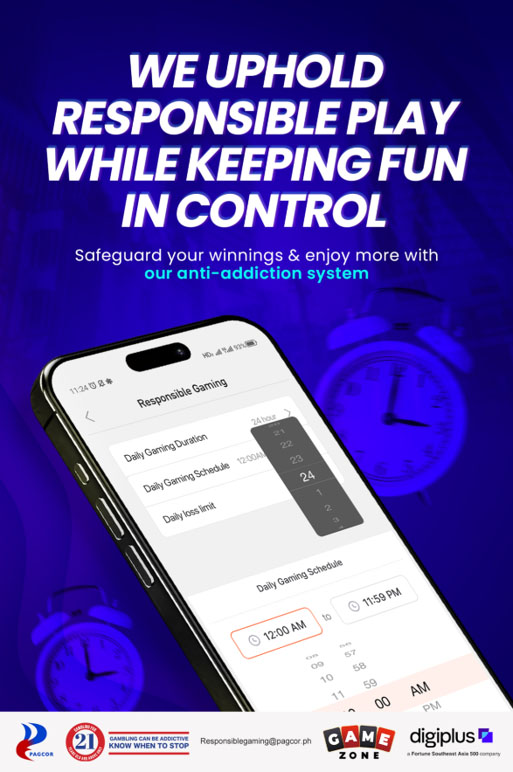
PAGCOR
responsible-gaming guidance supports discipline tools: time limits, budget
limits, avoiding borrowed funds, expecting losses as part of gambling, and
avoiding chasing losses. Session quality can be measured through consistency
with limits rather than a single round’s result.
Pusoy Online Options on GameZone
GameZone (also
searched as GZone, GameZone online, or GameZone casino)
features Pusoy materials that describe formats such as Pusoy Plus, Pusoy
Wild, and Pusoy Jackpot, with the reminder that mechanics and
availability can change. PAGCOR records list Pusoy Plus as an approved
specialty table game under GameZone.
PAGCOR’s
published registry identifies Total Gamezone Xtreme Incorporated (TGXI)
with Gamezone as a main brand and includes gamezone.ph as a main
domain, while listing gzone.ph among additional URLs. Platform catalogs
can shift, so current lobby checking becomes more reliable than older
screenshots or third-party lists.
GameZone License Notes and
Eligibility
GameZone’s
current Philippine App Store listing references PAGCOR licensing and includes a
reminder that gaming is intended for 21 years old and above. Login
prompts and terms also restrict play to qualified individuals aged 21+.
App Download Notes for iPhone
Users
The Philippine
App Store listing for GameZone – #1 Tongits Platform identifies DigiPlus
as the developer and supports iPhone on iOS 15.0 or later. Installation
can follow the standard App Store path: search the official listing, verify
developer details, then install. Modified APKs or unfamiliar download sources
increase risk, especially when branding appears copied.
FAQ
Should the
strongest five-card combination always stay intact?
Keeping it intact depends on whether the overall Front–Middle–Back hierarchy
and balance remain strong.
What
arrangement mistake shows up most for beginners?
Over-prioritizing one attractive combination while ignoring how it weakens
Middle and Front.
Can a strong
Pusoy arrangement guarantee a win?
Opponent cards stay unknown, so a strong arrangement improves structure without
guaranteeing outcomes.
Can Pusoy be
played on GameZone?
GameZone promotes Pusoy formats and PAGCOR records list Pusoy Plus; checking
the current lobby and rules helps confirm availability.
|