What to Prepare and Plan For When Travelling With Dogs in Australia
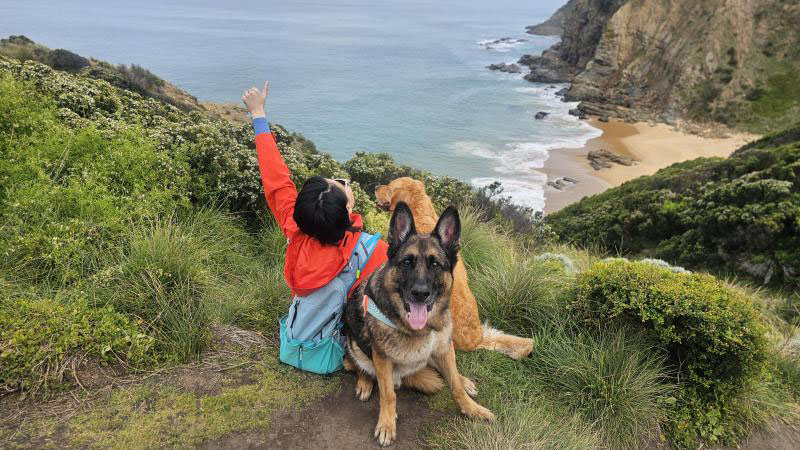
The listing said dog friendly. The
booking confirmation said dog friendly. So, you are all excited, put in leave
at work, pack your things and sudden host's reply to our check-in message
arrived: small dogs only, under 10kg, sorry.
Max, our German shepherd, weighs a
good 45kg. Our golden retriever, Pepsi, is pushing 38kg on a good day. We found
out the hard way that "dog friendly" doesn't mean the same thing to
everyone, and that trip is the reason PawScapes
exists.
We're far from the only ones packing
a lead along with the sunscreen, treats and plenty of water in the boot. Animal
Medicines Australia's latest Pets in Australia report puts pet
ownership at 73% of households in this country, with dogs the most popular pet
in nearly half of all homes.
The planning tools haven't caught up.
All the Booking sites, maps and itineraries are still built for people, with
the dog bolted on as a checkbox.
A checkbox on a form can't tell you
what you actually need to know, and in building PawScapes we learned it is no
easy task.
So here's what to prepare and plan
for when the dogs want to come too. Not just the packing list you've seen a
dozen times (that's at the end), but the things that catch first-timers and
experienced owners alike everytime.
Dog Friendly Is Usually a "Yes, But"
Most booking platforms treat pets as
a yes or a no.
The real policy is almost never that
simple. "Dogs welcome" can mean one dog only. Under a weight limit.
Outdoors only. Off the furniture. Never left alone in the room. Welcome, except
during school holidays.
There's also a big difference between
places that are set up for dogs and places that put up with them. The first
kind has a fenced yard, a hose for sandy paws and a towel by the door. The
second kind has a list of conditions and a cleaning fee, and you spend the stay
worrying about hair on the couch.
Big dogs feel this gap most and it's
a pain we know all too well. A 45kg shepherd and a 4kg terrier check exactly
the same box on a search filter.
They don't get the same welcome at
the door.
The fix is unglamorous but it works.
Read the full pet policy, not the filter.
Then message the host with your dog's
breed, weight and the number of dogs, and get the yes in writing. Worth asking
directly:
- Are there weight, size or breed limits?
- How many dogs are allowed?
- Can the dog be left alone in the room, even
briefly, and does it need to be crated?
- Which rooms and furniture are off limits?
- Is there a fenced yard or outdoor area?
- Are dogs excluded in peak periods or school holidays?
Often times, policies contradict
another policy so bes tto hear from the host directly to clarify things.
We had one listing that was
advertised for $50, but one of our users reported that it turned out to be $250
because they changed the price but listed it nowhere in the policies - just
removed the pet fee details.
Price the Pet Fee Before
You Fall for the Place
Pet fees are the other half of the
"yes, but".
They range from nothing at all to a
nightly surcharge with a cleaning fee on top, and they're often missing from
the search result entirely.
When we went through the published
pet policies of 1,800
dog-friendly stays for PawScapes, only 317 stated a fee, or stated
that there wasn't one.
The rest said nothing.
Among stays that do publish a price,
our pet-fee benchmark puts the median at $25 a night, with one-off fees at a
median of $50 and quotes ranging from $5 to $200.
Almost a quarter of the stays with a
stated policy charge no pet fee at all.
Over a week-long trip, a $25 nightly
fee adds $175 to the bill, so build it into the budget early and check what the
fee actually covers.
Is it a non-refundable surcharge or a
bond you get back?
Are you still expected to vacuum up
every hair before you leave?
The Rules Change at Every
Boundary
One of the harshest lessons
first-time travellers with pets experience is the variety of rules and
regulations in different regions.
Where your dog can go is set by local
councils, state park services and forestry bodies, and each draws its own
lines.
You can walk a dog along a council
beach, cross into a national park a few hundred metres later and be breaking
the rules without a sign in sight.
National parks are the big one.
In NSW, dogs and other pets are generally not permitted
in national parks and reserves, partly to protect wildlife and partly because
poison baits laid for foxes can kill dogs.
Dogs are allowed in some NSW regional
parks and in all NSW state forests.
Queensland keeps dogs out of national parks too, with
on-the-spot fines, while welcoming leashed dogs in some conservation parks,
state forests and recreation areas.
Only a handful of Queensland's park
camping areas take dogs overnight.
Driving through is a separate
question. Both states let you pass through a national park on public roads with
the dog inside the car, but you can't stop at lookouts or day-use areas along
the way.
We often see planning nature days
around state forests and regional parks rather than the headline national parks
when dogs are involved, and owners should check the council's own page for
beach rules (many run off-leash hours or seasonal restrictions), and read the
signs when you arrive.
We try our best to fill these gaps,
but we have seen cases where all it takes in one council meeting and a dream
dog-beach with great walkways is suddenly off-limits on the north end.
Without our users reporting these, we
would be flying blind.
Plan the Route Around the
Dog, Not the Sights
A human itinerary is a list of places
to go, whilst a dog itinerary has to account for every place the dog can't go.
That sounds obvious until you hit the
catch-22. Plenty of stays won't let you leave a dog alone in the room, and you
should never leave one in the car.
So the winery tasting room, the
museum or the indoor lunch suddenly needs a plan.
Take turns, book outdoor seating, or
line up a local doggy day care ahead of time with vaccination records ready.
Multi-stop trips multiply the risk,
because every stay has its own policy and one weak link can break the whole
route.
Fewer, longer stays usually make for
a calmer trip than a new bed every night. Shorter driving days help too.
The RSPCA recommends plenty of toilet breaks and on-leash exercise
along the way, and a dog that's had a proper run settles better for the next
leg.
Let the Weather Set the
Itinerary
In Australia, heat decides more of a
dog trip than any booking does.
The car is the biggest danger.
RSPCA NSW warns that a dog left in a
parked carcould die in as little as six minutes, even on
a mild day, and that open windows, shade and tinting do little to keep the
temperature down.
Hot bitumen and concrete can burn paw
pads, so walks belong in the early morning and evening. Flat-faced breeds like
pugs and bulldogs, overweight dogs, puppies and older dogs are all at higher
risk of heatstroke.
In practice that means beach time
first thing, driving in the air-conditioned middle of the day, and knowing the
warning signs: frantic panting, heavy drooling, weakness or wobbliness, gums
turning bright red or pale, and vomiting. If you see them, get the dog into
shade, wet its coat with cool (not ice-cold) water, and call a vet.
Ticks, Snakes and the
Nearest Vet
If your trip takes in the east coast,
paralysis ticks belong on the planning list.
They're found from Queensland down
the NSW coast into Victoria, and RSPCA NSW describes tick paralysis asone of the most common preventable causes of death
in dogs along that coast.
Paralysis ticks aren't found west of the Great Dividing Range,
which is exactly why dogs from inland homes can arrive at the coast
unprotected.
See your vet before you go about
prevention suited to where you're heading, including heartworm where it's
relevant, and check your dog's coat every day you're in tick country.
In the warmer months, keep the lead
on in long grass and dunes, where snakes like to sun themselves.
Then do the step almost everyone
skips.
The RSPCA suggests having the contact
details of vet clinics along your route and at your destination before you set
off.
In regional areas, find out which
clinic takes after-hours calls while you're calm, not at 11pm with a sick dog
in the back seat.
Get the Dog Ready for the
Drive
A dog that only gets in the car to go
to the vet won't love an eight-hour leg. The RSPCA recommends getting dogs used
to car travel gradually, with reward-based training, starting well before the
trip.
Restraint matters for everyone in the
car. The RSPCA's options are a crash-tested harness clipped into the seatbelt,
a crash-tested crate secured in the car, or a cargo barrier in a wagon or
hatch, noting that a barrier protects the people more than the dog.
There's no formal Australian standard for
crash-testing dog restraints, and restraint laws vary between states, so check
the road rules wherever you'll be driving.
A good run before departure helps,
and skipping food for a couple of hours beforehand reduces the chance of car
sickness.
If your dog does get sick, talk to
your vet well before the trip, not the day before.
Finally, make sure the microchip
details are current and recorded on a nationally recognised registry, not just
a state one, and that there's an ID tag on the collar.
What to Pack
The RSPCA's road trip checklist is a solid base. Ours,
with the extras we've learned to add:
- Regular food and treats for the whole trip
(sudden diet changes and travel stress don't mix)
- Bowls and enough fresh water for the drive
- Bedding or a travel crate
- Collar, harness, lead and the car restraint
- Towel and grooming gear
- Poo bags, and spares
- Medications, a copy of any prescriptions, and a first aid kit
- Vaccination records (day cares and some stays ask)
- A list of vets along the route
- A saved copy of each stay's pet policy and the host's written okay
Travelling with a dog takes more
planning, but most of it is front-loaded. Once the stays are confirmed in
writing, the route is built around the dog and the weather, and the vet list is
saved, the trip itself gets a lot easier.
That's the gap PawScapes was built to
fill: a guide to more than 10,000 dog-friendly stays, beaches, parks, cafes,
pubs, trails and wineries across Australia, with the actual dog policy for
each, tested by Pepsi, our golden retriever, and Max, the German shepherd who
started it all.
|