Running a Holiday House on Solar and a Battery: What the Rebates Are Worth in NSW, Queensland and South Australia
Holiday houses have an odd electricity profile. They sit empty for weeks, then fill with eight people running two air conditioners, a dishwasher and a pool pump for ten days straight. The bill for January can be more than the bill for the rest of the year combined, and the solar on the roof, if there is any, spends most of the year feeding the grid for a few cents a kilowatt hour.
That profile is exactly why a battery makes more sense on a holiday house than on a lot of full time homes. The panels charge it every day whether anyone is there or not, it carries the house through the evening peak when guests are cooking and cooling, and it keeps the fridge, the router and the lights running through the storm outages that hit coastal and regional areas every summer. Add the current rebates and the maths has changed a lot since 2024.
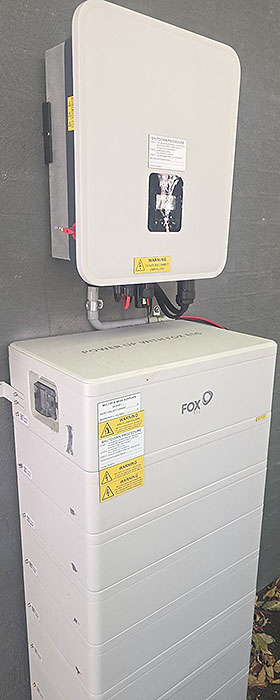
What a battery costs installed in 2026
Indicative installed prices in Sydney, Brisbane and Adelaide, before any discount, sit in these bands:
- 10 kWh: around $9,000 to $11,000
- 13.5 kWh: around $12,000 to $14,000
- 20 kWh: around $16,000 to $19,000
Regional coastal towns often price higher because there are fewer installers, and backup wiring or switchboard work adds to it. For a three bedroom holiday house with two split systems, 13.5 kWh is the common choice. Ten is enough if the house is mostly used in shoulder seasons.
The federal discount applies everywhere
The federal Cheaper Home Batteries program is the big one and it applies in every postcode in the country. It is not a rebate you claim afterwards. It is a discount the installer takes off the invoice, worth roughly 30 per cent of the battery cost. At mid 2026 rates that is about $2,500 off a 10 kWh battery, $3,400 off 13.5 kWh and $4,400 off 20 kWh.
The conditions are simple. The battery has to be paired with rooftop solar, new or existing, sit between 5 and 100 kWh, be on the approved list and capable of joining a virtual power plant, and be installed by an accredited installer. There is no income test and no requirement that it be your main residence, so holiday houses and investment properties qualify.
The rate steps down on 1 January 2027, by roughly $400 on a 10 kWh battery and $550 on 13.5 kWh, and the discount is set by the install date rather than the quote date. With lead times of four to eight weeks before summer, a contract signed by early November is the realistic way to land the current rate.
New South Wales
NSW stacks a second incentive on top. Since 1 July 2026 the state pays a single upfront amount for connecting a battery to an approved virtual power plant, worked out at roughly $40 per usable kilowatt hour on up to 28 kWh. That is about $400 on a 10 kWh battery, $540 on 13.5 kWh and $800 on 20 kWh, set by each provider rather than published as a fixed figure.
Together, a 13.5 kWh battery that costs $12,000 to $14,000 installed nets to about $8,000 to $10,000 in NSW today. The full breakdown by battery size, and what changes in January, is on the solar battery rebate in NSW guide, which is an independent enquiry service rather than a government site. For a South Coast or Mid North Coast holiday house with a January bill in the hundreds, that is a payback inside ten years before counting a single blackout avoided.
Queensland
Queensland is simpler. The state's own Battery Booster program, which paid up to $3,000, closed in May 2024 and has not come back, so the federal discount is the only money on the table. It still takes about $3,400 off a 13.5 kWh battery on the Gold Coast, the Sunshine Coast or anywhere else in the state, and some retailers in the Energex and Ergon areas offer virtual power plant credits on top, though those are commercial offers that can change rather than government money.
The post discount prices for Queensland, the eligibility rules and the install timing are set out on the solar battery rebate in Queensland page. For a Noosa or Gold Coast holiday house the case is as much about outages as bills. Summer storms take the power out for hours at a time, and a battery with backup wiring means the guests never notice.
South Australia
South Australia had the most generous state battery scheme in the country until it closed in 2022. What remains is a virtual power plant incentive through the state's Retailer Energy Productivity Scheme, which in 2026 is worth up to about $1,030 on a 13 kWh battery for priority households, including pensioner and health care card holders, and up to about $670 for everyone else. The general household funding ran out in May 2026 and is expected back in early 2027, so for most owners right now it is the federal discount alone, with the state amount as a possible top up next year.
The City of Adelaide also covers half the remaining cost up to $1,000 for homes in postcodes 5000 and 5006, which catches the North Adelaide holiday rental market. The solar battery rebate in South Australia guide keeps the priority household rules and current funding status up to date, which matters in SA because the state side moves around.
Things that catch holiday house owners out
No solar, no federal discount. The battery has to be paired with panels. If the house has none, the panels go on first, and the combined job is usually cheaper than doing them a year apart.
Backup is not automatic. A battery only runs the house through a blackout if it is wired for backup, which is extra. If outage protection is the reason you are doing this, say so at the quote stage.
Virtual power plants are a condition, not an option. Both the federal rules and every state incentive require a VPP capable battery, and the state money requires actually joining one, typically for at least 12 months. For a house that is empty most of the year that is close to free money, because the VPP is drawing on a battery nobody is using.
Renters can do it with permission. If the holiday house is leased long term over winter, the tenant can install with the owner's consent, though the owner is the one with the long term interest.
The short version
- A holiday house charges a battery all year and uses it hardest in January, which is the ideal profile.
- The federal discount is about 30 per cent off, applies to holiday houses, and drops in January 2027.
- NSW adds a few hundred dollars for joining a virtual power plant. Queensland adds nothing. SA adds something for priority households now and more in 2027.
- 13.5 kWh suits most three bedroom coastal houses. Get backup wiring if outages are the problem.
- Sign by early November to install at this year's rate.
Figures are indicative at mid 2026 certificate prices and change with the market. Confirm the current amount with your installer before signing.
|