Sydney Marathon Welcomes its Strongest Elite Field Yet
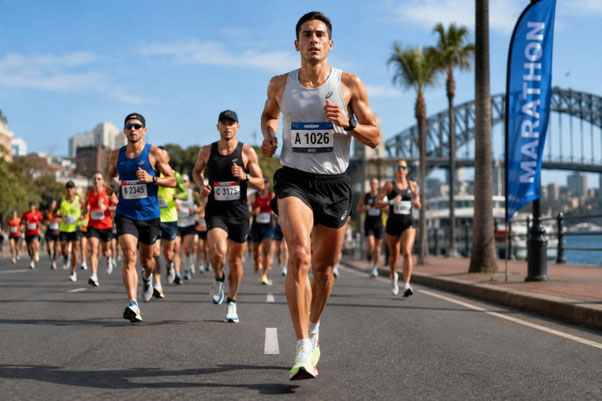
The TCS Sydney Marathon will bring one of the strongest distance-running fields ever seen to the start line on August 30, 2026. Organisers have confirmed the deepest elite lineup in the event's history for Sydney's second year as an Abbott World Marathon Major.
The race is one of seven events in the Abbott World Marathon Majors series, alongside Tokyo, Boston, London, Berlin, Chicago and New York. The series runs across the calendar year, with elite athletes collecting points at its major races rather than competing at a single tournament in one location.
This year's Sydney field gives the race an unusually strong competitive edge. Reigning world champions Alphonce Simbu and Peres Jepchirchir headline the men's and women's entries, while former major winners, Olympic medallists and several athletes with some of the fastest personal bests in the field add depth behind them. For followers comparing likely race scenarios alongside markets available through bizbet, those confirmed names provide much more useful context than general expectations about the event.
Sydney's new status raises the stakes
Sydney only joined the Abbott World Marathon Majors in 2025, becoming the seventh member of the global series. Its arrival placed the n race alongside Tokyo, Boston, London, Berlin, Chicago and New York.
The 2026 edition now provides an early sign of what that status can mean for the quality of the field. For the first time in Sydney Marathon history, the reigning men's and women's world champions will compete at the same edition.
Simbu won the men's marathon at the 2025 World Athletics Championships and arrives with a personal best of 2:02:47. He also finished second at the Boston Marathon in both 2025 and 2026. Jepchirchir brings an even longer list of major victories, having won Boston, New York and London, while her 2:14:43 personal best is the fastest in the Sydney women's field.
Elite depth changes the race picture
Simbu is far from the only major contender in the men's race. Sisay Lemma has the fastest personal best in the field at 2:01:48 and already owns victories at the Boston and London Marathons. Timothy Kiplagat brings a 2:02:55 best, while Vincent Ngetich has reached an Abbott World Marathon Major podium in three consecutive years.
Defending Sydney champion Hailemaryam Kiros also returns after winning the 2025 race in 2:06:06, the fastest marathon ever run on soil. Hagos Gebrhiwet adds another unknown to the race as the Olympic 5,000m medallist prepares for his marathon debut.
The depth is striking: 25 men in the field have personal bests below 2:10, while 14 have broken 2:05. Nineteen have already run faster than Sydney's existing 2:06:06 course record.
Jepchirchir leads a deep women's race
Peres Jepchirchir starts as the headline name in the women's field. The reigning world champion has already won three of the established World Marathon Majors — Boston, New York and London — and her 2:14:43 personal best is the quickest among the confirmed Sydney entrants.
Irine Cheptai provides another major threat after finishing third at the 2024 Chicago Marathon in 2:17:51. Magdalena Shauri placed third in Chicago in 2025, while Stella Chesang, Ruti Aga and Haven Hailu have all won marathons during 2026. Four-time Olympic medallist Vivian Cheruiyot adds further championship experience.
As with the men's race, depth matters. Twenty women have personal bests below 2:22, thirteen have broken 2:20 and five have already run faster than Sydney's current women's course record of 2:18:22.
Local runners gain a rare opportunity
Elite invitations influence more than medal chances.
Domestic athletes seldom receive chances to race against so many established marathon stars without travelling overseas. That experience often proves valuable even when victory remains out of reach.
The national marathon championships will also share the same stage. Prize money reaches a new level for home competitors, giving extra motivation beyond personal best times.
Race officials believe direct competition against the world's finest creates lessons impossible to reproduce during ordinary training blocks. Those benefits may become clearer months after the finish rather than on race day itself.
More than one race unfolds on the road
Most headlines will follow the front pack.
The picture changes only a few minutes later. Hundreds of experienced runners arrive with personal targets instead of medal ambitions. For many, setting a lifetime best would mean more than a place near the front.
A quick early pace can help some athletes settle into better rhythm. Others realise too late that they pushed too hard. That difference usually becomes obvious after 30 kilometres, when patience often matters more than raw speed.
International participation also adds another angle to the story. Competitors earned their places months before race weekend and arrive with different approaches to marathon racing. Those contrasts make the outcome harder to predict.
Coaches rarely judge a performance by finishing position alone.
A controlled second half, smart pacing and a strong finish can leave a lasting impression. Performances like that often influence invitations for future major marathons.
Elite depth complicates the betting picture
Sydney's confirmed field makes the pre-race betting picture more complicated than a simple comparison of famous names. Simbu arrives as the reigning world champion, but Lemma owns the faster personal best. Kiros has already proved himself on the Sydney course, while Gebrhiwet enters the marathon with elite track credentials but no previous result over 42.195 kilometres.
The women's race presents similar questions. Jepchirchir brings the strongest collection of major titles, yet Cheptai, Shauri and several recent marathon winners give bettors more than one form line to compare.
Recent performances, course experience and personal bests therefore deserve to be considered together. Checking current prices through bizbet download can sit alongside that wider pre-race research without replacing the sporting evidence behind each selection.
Sydney itself adds another variable. The 42.195-kilometre course begins in North Sydney, crosses the Sydney Harbour Bridge and finishes at the Sydney Opera House Forecourt.
Nobody enters with complete certainty.
Championship success does not always translate into another victory. Marathon racing has repeatedly rewarded patience over reputation.
Growing interest reaches far beyond elite competition
The professionals attract headlines.
Interest extends well beyond the elite race. More than 123,000 runners entered the ballot for the 2026 Sydney Marathon, a 56% increase from the previous year and a record for the event. Organisers expect a record field of 35,000 runners on August 30.
Crowds should reflect that enthusiasm.
Packed streets usually create faster early sections and stronger support throughout the course. Visiting supporters also add another layer to the atmosphere.
Television audiences will watch more than finishing positions.
Many will focus on pacing decisions, lead groups and tactical changes. Those moments often define memorable marathons long before the finish line appears.
A race that could leave a lasting mark
Every major marathon hopes for a historic edition.
Few receive this combination of circumstances. Record public demand meets the strongest elite field ever assembled for the event. That balance creates genuine sporting value before a single kilometre has been completed.
The reigning world champions bring obvious attention.
Olympic medallists and major marathon winners ensure the competition remains unpredictable from start to finish. No single favourite stands comfortably above the rest.
Late August will reveal the final answers.
Until then, the announcement itself has already become one of the season's biggest distance-running stories. If the racing matches the quality of the entry list, this marathon could become one of the defining road events of the year.
|
